Google Adwords Keywords Optimization Ebook
One of the reasons behind a successful PPC Campaign is proper implementation of key-words. Thorough keywords Research is one of the most important steps for proper implementation of keywords.
Therefore, you must be mindful in managing the keywords for your campaigns.
You need to have a proper understanding of what your customers actually put in the search box to find your product/service.
This will let you know how to structure keywords in your account.
Keywords in PPC campaigns need much advance knowledge to manage. In short, treating keywords flawlessly is the key to generate success in PPC.
A single wrong approach to PPC keywords can damage the entire campaign performance. Therefore an experienced PPC manager always justifies keywords with different bench-marks.
In this comprehensive ebook, we will discuss some methodologies of implementing PPC keywords properly.
CHAPTER NO. 1
Employ Right Keyword Match Type
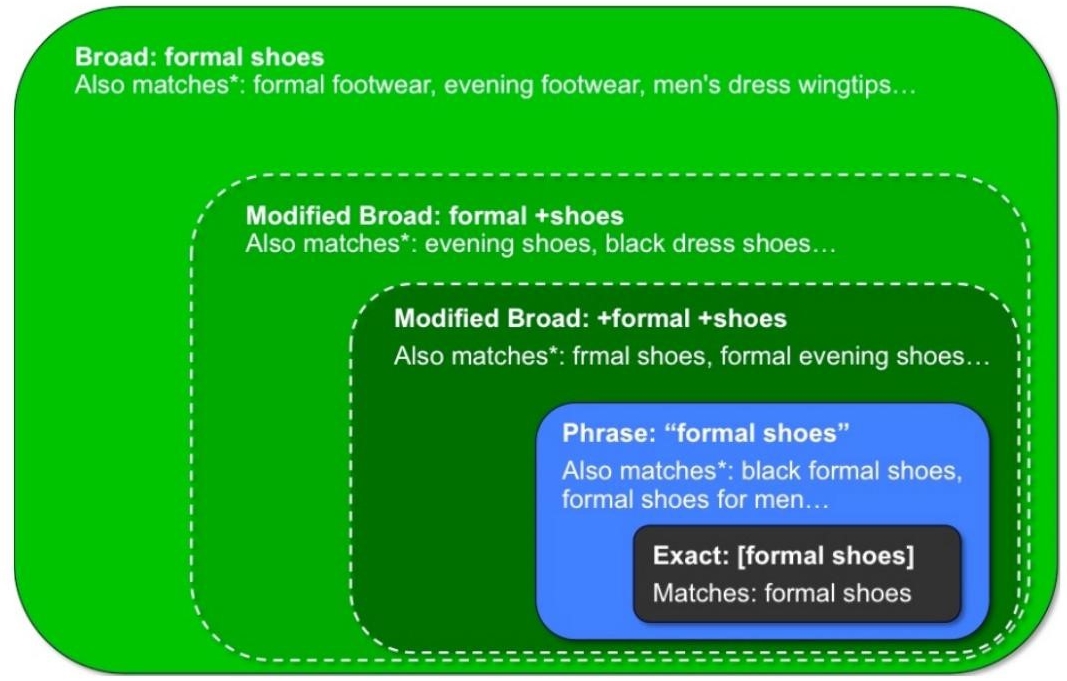
Selection of right match type determines whether your keywords will be more aggressive or will get restricted exposure.
Match type selection is based on the objective of your AdWords campaign. You must introduce keywords as per your target audiences. Otherwise, your ad will drive in unqualified traffic.
Keywords match type is one of the key factors that decide the quality of conversions of your campaign. Match type actually determines on which search query your ad should be shown.
Proper selection of PPC ad match type lifts the improvement of ROI. Match type selection tells you about who can actually see your ad. By using match type you can control exposure of your ad display.
There are four keywords match types. You must know about each of the match types to realize why and when you should use them.
1. Broad Match Type:
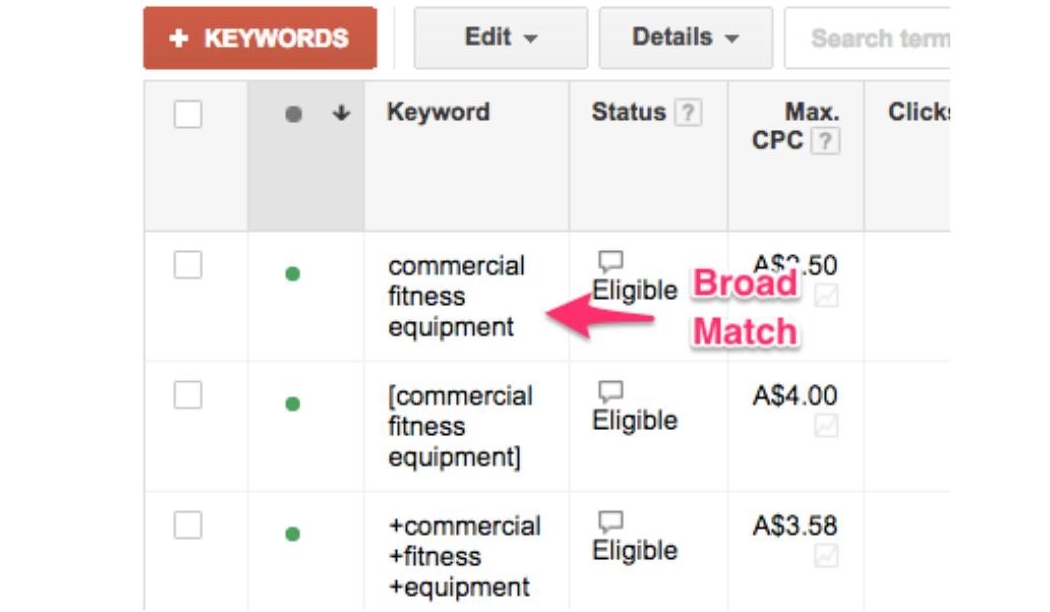
When you start your first campaign, the keywords will set to broad match type by default. This match type maximizes the exposure of your ad. This match type leads your ads to reach wide range of people.
In this match type your ad is likely to display in all the queries that have similar phrases or close keywords variations. These variations may include, singular, plural, misspelling, acro-nyms and accents etc.
Why you should use Broad Match Type Keywords?
This match type lets your ad to appear before maximum number of people. It also helps your ad to get maximum numbers of impressions. This is a perfect tool for your ad to max-imize the volume of clicks.
This match type lets your ad to appear before maximum number of people. It also helps your ad to get maximum numbers of impressions. This is a perfect tool for your ad to max-imize the volume of clicks.
As your ad gets maximum exposure, there are wide possibilities of driving in unqualified clicks. It also increases probability of your ad to appear before irrelevant search queries.
2. Broad Modifier Match Type
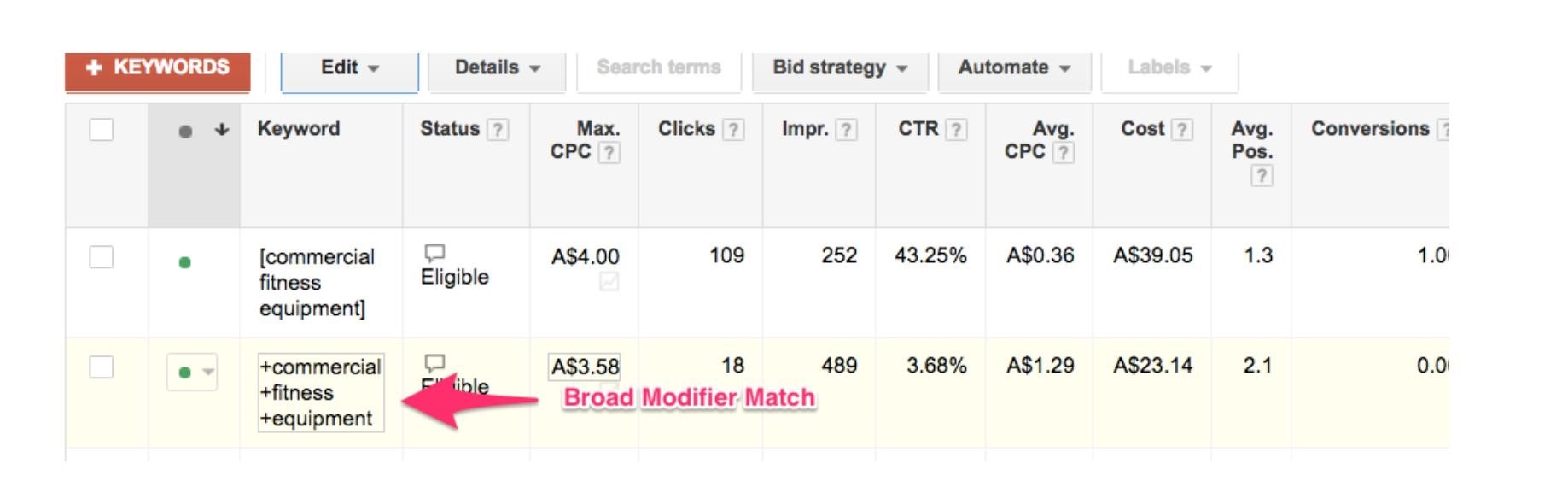
This is also a type of broad match type but with little restriction. You need to add a ‘+’ sign before your keywords you modify the broad match type.When you place this ‘+’ sign before the keyword, you are more likely to make your ad more relevant to the queries.
This modifier tells Google that if the word with the ‘+’ sign is present in the search query, your ad will be eligible to display.
Your ad will appear only then when the query is having more close variations. In Modified Broad Match your ad will appear only when the keywords appears in search query.
Why you should use Broad Modified Match Type Keywords?
This match type lets you get more control over your broad match type keywords. It is actually more restricted than broad match type. Using this match type can help you to eliminate the probability of non targeted clicks.
Disadvantage of using Broad Modified Match Type Keywords.
In spite of having entrusted restrictions there are still lots of possibilities to get untarget-ed clicks. Though you get more control over your keywords but cannot restrict the clicks from being wasted.
3. Phrase Match Type
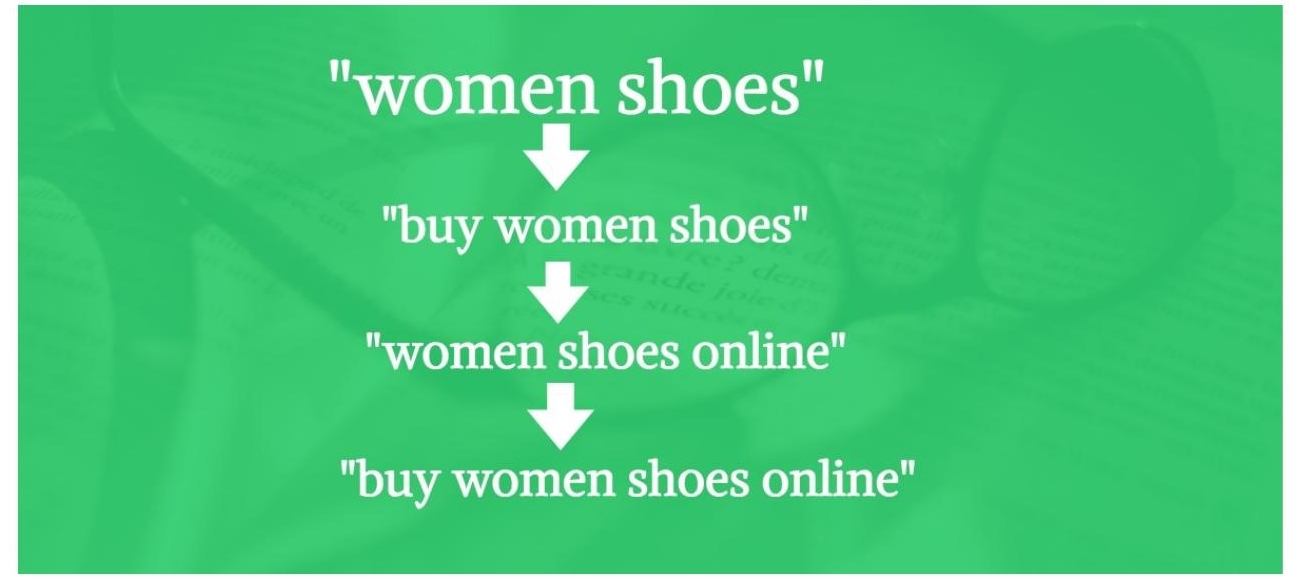
When your keywords carry resemblance with same phrase of search query your ad will be shown. Most of the PPC managers love to use this match type because it inflicts a greater control.
You can restrict the ad appearance through this match type. The search query may have words either before or after your key phrase.
Why you should use Phrase Match Type Keywords?
It lets you to have higher a level of control. It also helps to maximize the numbers of rele-vant clicks. As this match type increases qualified clicks, hence, the conversions are more likely to get improved.
Though this match type introduces more restriction but your ad still can reach wide range of audiences.
Disadvantage if using Phrase Type Match Keywords
Due to the restriction, it will not let your ad to reach out to as wide range of audiences as broad match type could have done. There is still a little chance to display your ad on irrele-vant search queries.
4. Exact Match Type
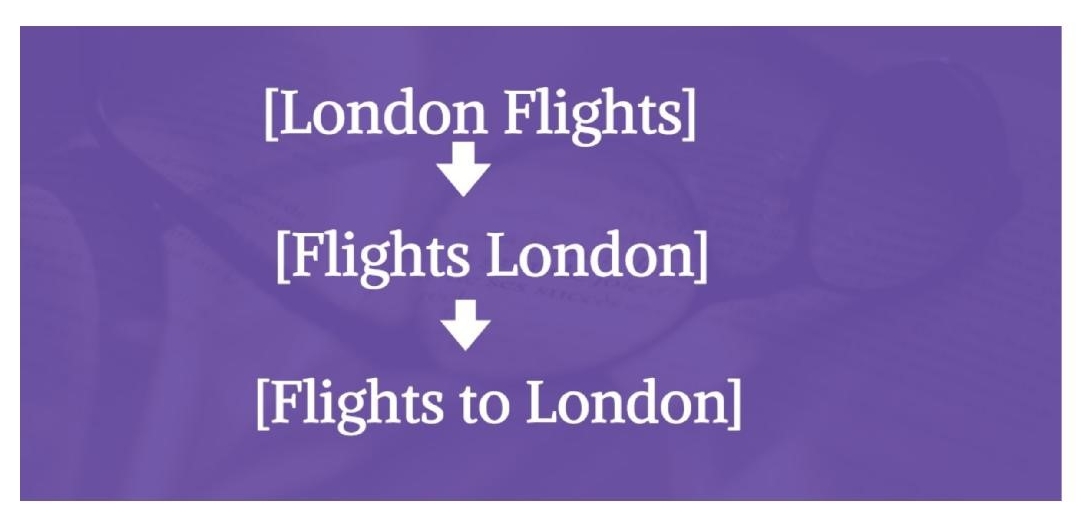
When you want to put optimum level of restriction then Exact Match Type should be your obvious choice. You get maximum control over your ad display. Your ad will only appear when a person type exact phrase of your keywords in similar order.
Exact Match Type is more focused and triggers to invite good clicks. If your key phrase is ‘wooden furni-ture’ then the search query must have the words ‘wooden’ and ‘furniture’ in same order.
Why you should use Exact Match Type Keywords?
This match type invites only the qualified clicks. Ad having this match type will mostly display your ad before the people, who are interested in your products or services.
This is a strong target oriented match type. This match type also helps to lower CPC rate.
Disadvantage if using Exact Type Match Keywords
This match type increases possibility of getting less numbers of impressions. To increase impression share in exact match you need to do extensive keywords research. Due to strong restriction your ad may skip reaching some of the potential users.
Match type influences results of your PPC ad Campaign. You introduce match type in order to control your campaign restrictions.
You may work with the combination of all the match types in different ad groups to know which one is working best for your ad. Your marketing strategy will decide which one is suitable for you.
Here are some tips on how you can work with match type
(i) Bids
Applying perfect match type will help you manipulate bid. You can make it more aggressive or restricted. Bid can affect average position, Conversions and CPA.
(ii) Competitors
You should observe what your competitors are doing with match type. Your good observation may help you to select workable match type for your campaign.
(iii) Performance by a period
You should run your campaign with each match type for a certain period. It will tell you which one is performing better for your objectives.
(iv) Account structure
You should structure your account on various segments classified on using different match types. Creat-ing separate ad texts for separate match types for a single product can help you to know about the most optimal match type for your campaign.
CHAPTER NO. 2
Do Not Avoid Using Negative Keywords
Implementation of correct negative keywords improves your PPC ad profits dramatically.
Negative Keywords are other essential Keywords. They do let your ad to display before relevant search queries. But they also help you to eliminate displaying your ad on irrelevant search queries.
In order to run your PPC campaign successively you need to add negative keywords effectively.
How Negative Keywords Help
Negative Keywords actually eliminate unqualified search queries. If a search query contains any of the negative keyword phrases or words you used, then your ad will not be shown against the query.
For an example, if you are selling smart phone and you do not repair or sell used smart phone then your negative keywords should be Used or Repair.It is actually help your ad focus on target audiences.
Just like Keywords Matches Negative Keywords are also having Match Types-
- (i) Broad Match: You use this match type when you want to eliminate search queries having any of your listed keywords.
- (ii) Exact Match: When a query exactly matches exact of your keywords listing your ad will not be appeared. This match type is more focused.
- (iii) Phrase Match: This match type prevents your ad from displaying to search queries that match phrases of your negative keywords listing.
You can introduce negative keywords in your PPC Campaign in various levels-
- (i) Account Level: You can introduce negative keywords in your account setting. In shared library you can insert negative keywords to implement later on various campaigns also.
You should use account level negative keywords when you are running multiple campaigns. It eliminates displaying your ad when the query is irrelevant to any of your campaigns.
- (ii) Campaign Level: You can use negative keywords for a single campaign as well. Every ad group under the campaign will be affected by the listed negative keywords.
It allows you to imply the negative keywords for a large number of product categories.
You should implement negative keywords at this level when you want to protect a larger number of keywords in a campaign.
- (iii) Ad Group Level: This is not as broad as account level. Introducing negative keywords at this level is very significantly target oriented and specific.
You must go with this level if you like to protect specific keywords in ad group. At this level you become more granular with your negative keywords listing.
You should opt for different set of negative keywords for different ad groups. As it is more specific it eliminates most numbers of unqualified clicks.You should also experiment with different types of negative keywords variations. It will also prevent clicks from untargeted people.
How Negative Keywords Improve PPC Campaigns
- (i) Increases CTR: As you use negative keywords to eliminate most number of irrelevant traffics your ad tends to get more focused. Through filtering unqualified traffics it helps to improve CTR.
- (ii) Increases Conversions: Negative keywords are meant to be guarding the productive keywords. By using negative keywords you increase the possibilities of keywords conversions. Negative keywords focuses to drive only the quality clicks. Therefore, your CPC drops gradually.
- (iii) Improves Quality Score: As it helps to lower CPC and increases CTR, the quality score gets improved gradually. Quality score helps to lower overall expenses of running your PPC campaign.
CHAPTER NO. 3
Group Your Keywords
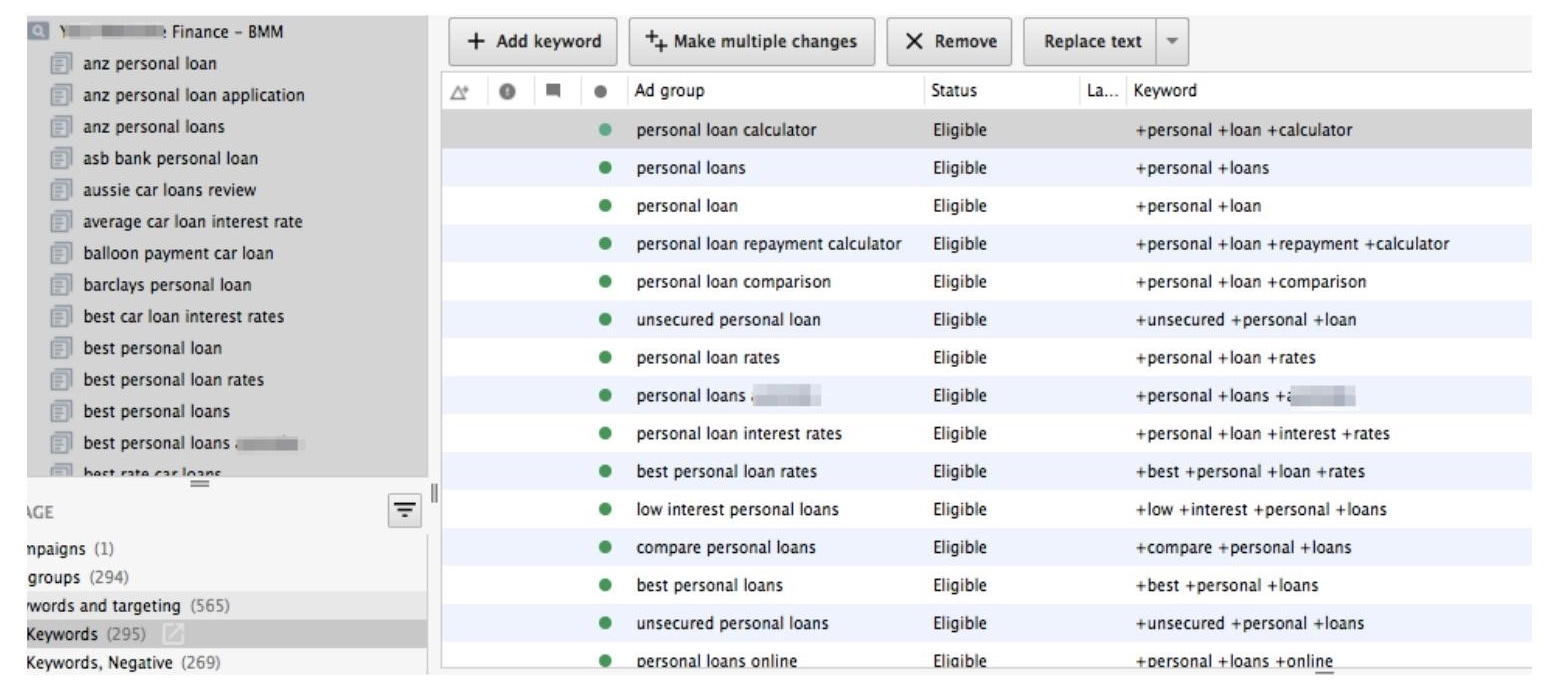
Grouping of keywords is another important task that helps you to lower campaign cost by improving keywords performance. Clients often complain about expenses involved in PPC Campaign. Most of them are unfamiliar of Keywords grouping.
We suggest them to group keywords and it will help them to optimize campaign. We usually introduce large set of numerous keywords. They will only serve the optimum result when they will be segmented in appropriate groups.
Grouping keywords means that you organize them in an appropriate manner. You should pay much attention in grouping to make them perform efficiently. It helps you to improve the ROI.
You must group keywords in order to keep your data organized. Well knitted keywords grouping makes your way to success.
High themed ad groups helps you to create more relevant ad texts.
You can target specific audience with a certain keywords group.
Grouping has vast impact on improving quality score. Good quality score lowers PPC costs and lets you achieve good overall performances.
Tightly themed keywords’ means High CTR, good Quality Score and more possibilities of conversions.
Highly specific keywords set have the major possibilities to display the ad only to the target audience.
How To Group Keywords
Grouping Keywords improves campaign performance in effective way. However, we are recommending you to follow some important strategies while grouping keywords.
Some important tips to group your keywords are:
- (i) Create a list: You must create a list of keywords you want to use in your campaign. Google Keyword Planner tool can help you find most relative set of keywords for your term. You should avoid listing virtually useless keywords.
- (ii) Segment the keywords: Now you need to organize them in best possible way as per your objective. You have to bring the key-words that are sharing common theme in a single segment.
Segmentation may be based on- long tail, similar 2-3 words phrases, category, match type and by product.
- (i) Add to Ad Group: Now add keywords on different ad groups. Remember, an ad group must have common themed key-words.
- (ii) Organize Keywords by profitability: You may group your listed keywords as per prospect profitability. You may also consider product margin while grouping keywords. This considers the definition of value for your selected keywords.
It is fruitful way if you are following portfolio system (for bid management). You can easily group keywords in lower value to higher value.
- (i) Group by Match type: This is the most common ad group practice. You can allocate specific ad group for the keywords, which are sharing same match type. It lets you have more control over your keywords.
- (ii) Group by Performance: This process is much critical and takes much time to build. You have to put well performing keywords in separate groups and poor performing keywords in other groups.
You can make strategy to gain more conversions from the groups with well performing keywords. And you should try to optimize poor performing keywords separately.
You need to analyze keywords report to find the most and the least performing keywords. On the basis of keywords report you need to pull out poor performing keywords and run separate group with them.
By adding performing keywords in separate groups you can blow more impact over your success.
Though ‘keywords grouping’ needs much effort and proper understanding, it ultimately determines visibility or impressions of your ad.
Therefore, you need keen observation for this. You may also use keywords grouping tools. You may follow common practices but you need to structure your own system.
Stuffing keywords in ad group causes the occurrences of having improper grouping of keywords.
CHAPTER NO. 4
Do Not Stuff Keywords in Your Ad Groups

You have already gathered knowledge on how and why to group keywords. Another important thing you should consider while putting keywords in an ad group and that is not to add all your keywords in a single ad group.
You group keywords in organized in a way to make them perform well but gathering too much of key-words in an ad group will show reverse result.
It does not mean that all the relevant or meaningful keywords together in a group can elevate campaign performance.
Good keywords may work better individually but in a single group they may kill your ad relevancy. We always recommend our clients to avoid gathering too much keywords in a single ad group. We personally prefer to use single keyword group.
Technically, less than 10 keywords in an ad group improve your ad’s health. You may find more than 10 keywords variations but you should stop before considering them all.
How adding keywords in a single group can affect
All your keywords in a single group give negative impact over target people. It also lowers performance of your PPC Campaign.
Your main message, that you want to convey will be lost under the crowd of keywords.
Including Keywords in an ad group fails to improve PPC Campaign performance.
Ad group stuffed with keywords is likely to get fewer clicks.
It will be more likely to display your ad maximum numbers of irrelevant search queries. Therefore your ad gets more irrelevant impressions.
We have found using single keyword ad group is more focused and can produce good result. You should use single keyword in an ad group if possible.
It arrays more control over your ad display. As it is has higher relevancy, it enables triggering only the relevant search queries. When you use single keyword in an ad group you reduce difference between “What you offer in your landing page and your ad text.”
As you get familiar with this you will strategically use this technique to improve CTR.
CHAPTER NO. 5
How to make Keywords lists in PPC
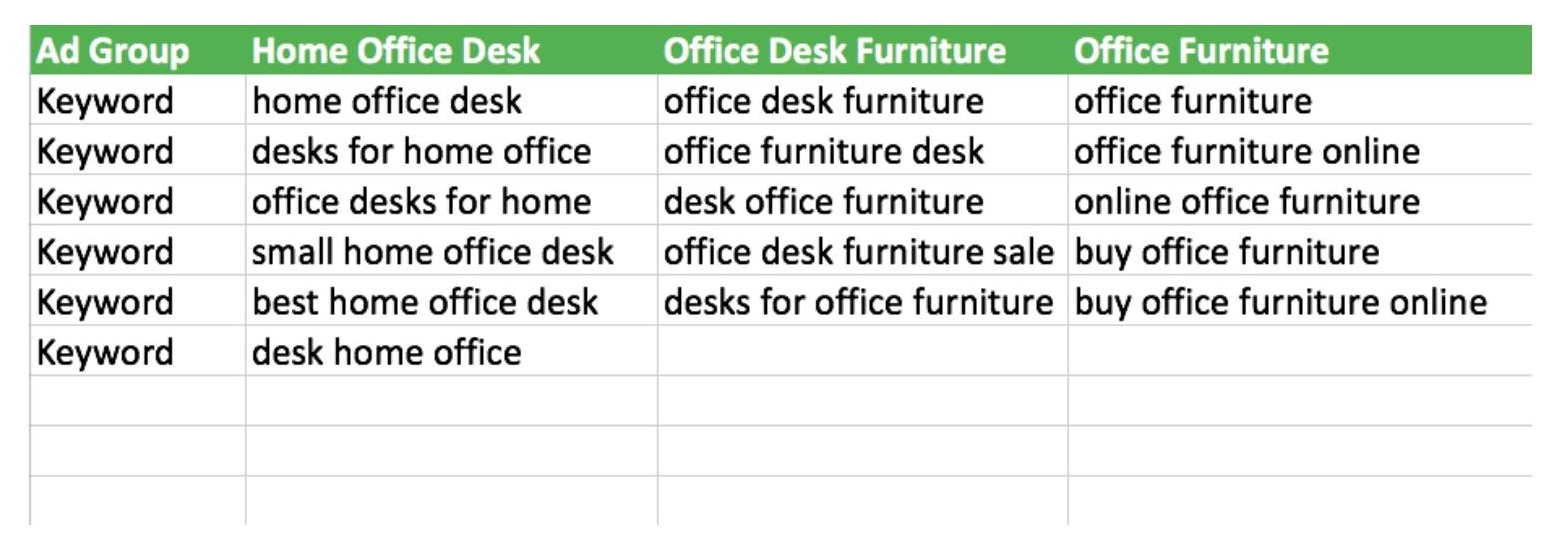
Search engine marketing or PPC ads is all about selecting effective keywords. Though Google offers nice tools to select apt keywords for your ads but you need to follow proper strategy in order to achieve success.
Ultimately keywords are the anchor that determines whether your ad should be displayed or not against a certain search query.
You need to identify keywords that would successfully display your ad before target audience.
It is very important to select proper keywords for good conversions and great ROI. You should consult with an expert while selecting keywords.
You can simply follow strategies that we are providing below to make effective keywords list.
- (i) Recognize your Audience: To get good conversions you need to make your ads relevant. Try to identify their activities as per your products. It may help you out to design your ad accordingly.
You should know how you can provide your products to them and how your products can help them. It also helps you to know what set of words or phrases they use to find the products you sell.
- (ii) Select Productive Keywords: When you are making your keywords list you must limit it only with the most relevant keywords. Do not increase volume of your list with unnecessary keywords. You should also select only those words that can more likely to make conversions.
- (iii) Try to be specific: You should avoid using general keywords. PPC campaign is not meant for calling huge loads of traffic.
You just have to attract only quality traffic. Single word keywords are often very generic. Therefore, you should use keywords that have at least two words to be more specific.
Sometimes, too specific keywords fail to draw traffic and remain as complete waste of money. You should not be too specific in keywords because it may limit exposure of your ad.
- (iV) Use Google Analytics : Analytics tell you about keywords performance. Using Web analytics can help you to identify which keywords are working better. You should run keywords review in weekly basis so that you can improve keywords performance.
- (iV) Keywords should be relevant to Ad Copy and Landing Page When a user finds your ad in search result they get a primary idea on your products or services. Your ad-copy should include keywords that can make users feel they are at exact place. Ad copy must have keywords that are relevant to your products.
Your landing page must be relevant to keywords you have used in ad copy. For which keywords users find your ad in search result, your landing page should contain those keywords also. Relevant landing page increases likelihood of conversions.
- (iV) Utilize Keywords Variations A single keyword may have different variations. Different users may search for your products using different variations. Lack of introducing variations of keywords may cause losing a large number of quality clicks.
Variations may use various terms such as, synonyms, misspellings, alternative spellings, singular term, plural term and many more.
- (iV) Look at your ad as a user This is the most needed step. You should look at your ad at the point of view of a user. You should search for your product in search engine. And be sure of what keywords most of the users like to put to find your products or services.
CHAPTER NO. 6
How to Identify Non Performing Keywords
Main purpose of keywords in campaign is to make money. Yes, it is money that you want from your listed keywords. As you are running your campaign for a period, you may notice there are some keywords that are not working.
Not working in the sense, they are not getting clicks or unable to get conversions. We would like to tell you that there are only few keywords that can make business. We must tell you the numbers of keywords you use in your ad campaign most of them are nothing but wasting your money.
Main purpose of keywords in campaign is to make money. Yes, it is money that you want from your listed keywords. As you are running your campaign for a period, you may notice there are some keywords that are not working.
Not working in the sense, they are not getting clicks or unable to get conversions. We would like to tell you that there are only few keywords that can make business. We must tell you the numbers of keywords you use in your ad campaign most of them are nothing but wasting your money.
Ways to identify non performing keywords are listed below.
- (i) Keywords with no Impressions People often add too many keywords without considering the fact that whether they actually will work or not. Keywords that are not getting impressions are simply wasting your time. You need to trim them out from your account.
People often add too many keywords without considering the fact that whether they actually will work or not. Keywords that are not getting impressions are simply wasting your time. You need to trim them out from your account.
- (ii) Keywords having Impressions but not getting Clicks Advertisers often ask us- “Our keywords are having numbers of impressions but why are they not generating even a single click?”
Your ad appears only when users put your keywords in search query. At this point users can only see your ad. If they leave without clicking on your ad then it will not generate business for you.
Users will only click on your ad when your ad meets their requirements. If your keywords are unable to get clicks, they are actually irrelevant to their needs.
You might be confused if those keywords are working because they are making impressions. In reality, they are not working at all. Having too many impressions without generating clicks actually lowers CTR. And it means it affects Quality Score.You need to take a solution for those ‘pretending to work’ keywords. They are not only hurting overall ad performance but also draining your money.
- (iii) Keywords getting number of Clicks but no Conversions
You may be happy that none of your keywords matches above mentioned two points. You need no stop here and ask yourself if all your keywords are generating conversions!
Just getting clicks is not enough, keywords are not performing if they are not generating conversions as well. Good Conversions rate creates business that converts into success of an ad campaign.
You should find those keywords that are not converting because they will hurt your account slowly. Finally they will appear to be cause of wasting huge amount of money and time.
These keywords must be eliminated at once as they increase your Cost of Acquisition and eat out your budget. Like a parasite, such keywords live by sucking your money and reducing quality score.
CHAPTER NO. 7
Measure Keywords Performance
To improve your campaign performance you need to trace how many keywords are sitting there doing nothing. You need to filter non performing keywords to boost well impact over your ad campaign.
You can simply use Google adwords keywords filter to measure performances of keywords. We would like to suggest you to use keywords filter report to find following points
- (i) Number of active Keywords in your Adwords AccountYou need to trace out total numbers of active keywords in your PPC account. Active keywords are those, which are more likely to get impressions and have yet not been paused or deleted.
In order to get reports from Google adwords on total numbers of active keywords, you need to go to Keywords tab Click on Filter then select Impressions less than equal to zero. Try to check at least last 14 days data to get better data insights.
If keywords don’t get even 1 impressions in last 14 days that means these keywords have very low search volume and no one is searching for these keywords.
- (ii) Number of active keywords that are exhausting your money
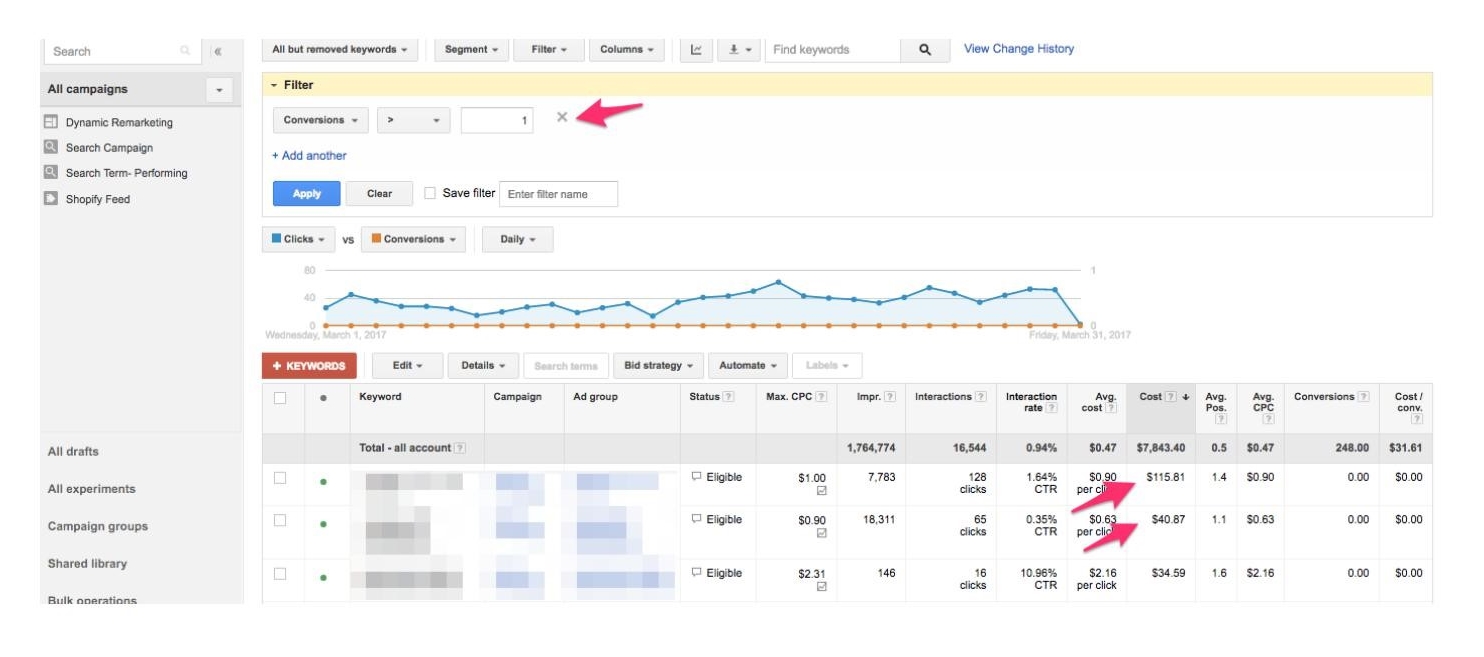
You need to have close eye on the report to know how many of active keywords are actually paying you back.
Keywords that are having numbers of clicks but are not generate Conversions will cause higher Cost of Acquisition. They are sucking your budget.
You can download these keywords same as above, here you need to set filter for keywords which spent X amount of money and gave zero conversion.
- (iii) Number of keywords that are paying you back
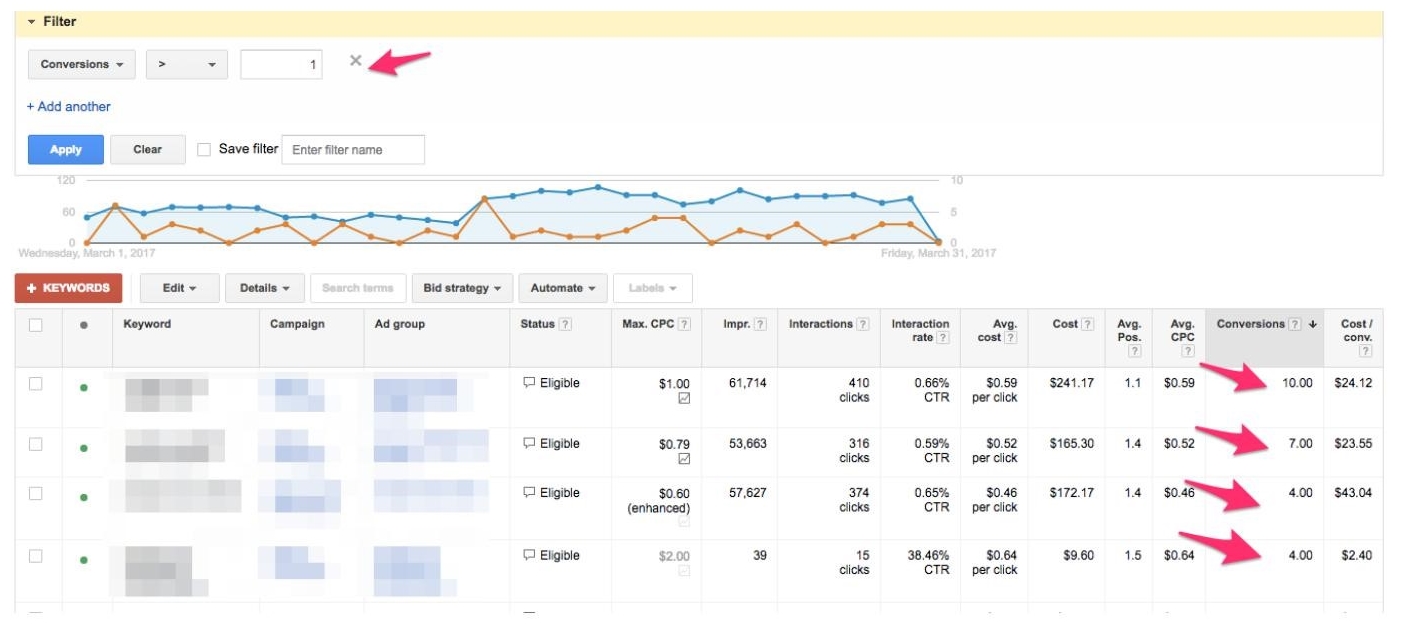
At the end of the day you will find that there are only few keywords that are actually able to convert. You need to work with these keywords.
If some keywords are giving less than 10% conversions you should also bid for them. They will finally count your campaign success.
As you analyze report you will find more numbers of such non performing keywords. We do not consider them and do not allow them to waste money and time. It would be better to concentrate on those keywords that are paying you back..
CHAPTER NO. 8
How To Deal With Non Performing Keywords
You should give a considerable time to analyze keywords performance. You can take report on monthly basis. But we suggest you to analyze at least 6 months report.
We suggest advertisers not to waste time and money for those non performing keywords. These keywords are actually affecting quality score and doing nothing.
Once you have keywords performance report, your next step will be to take strategic action on non performing keywords. You should ask yourself what to do with almost 94% useless keywords.
- (i) Keywords with No Impressions
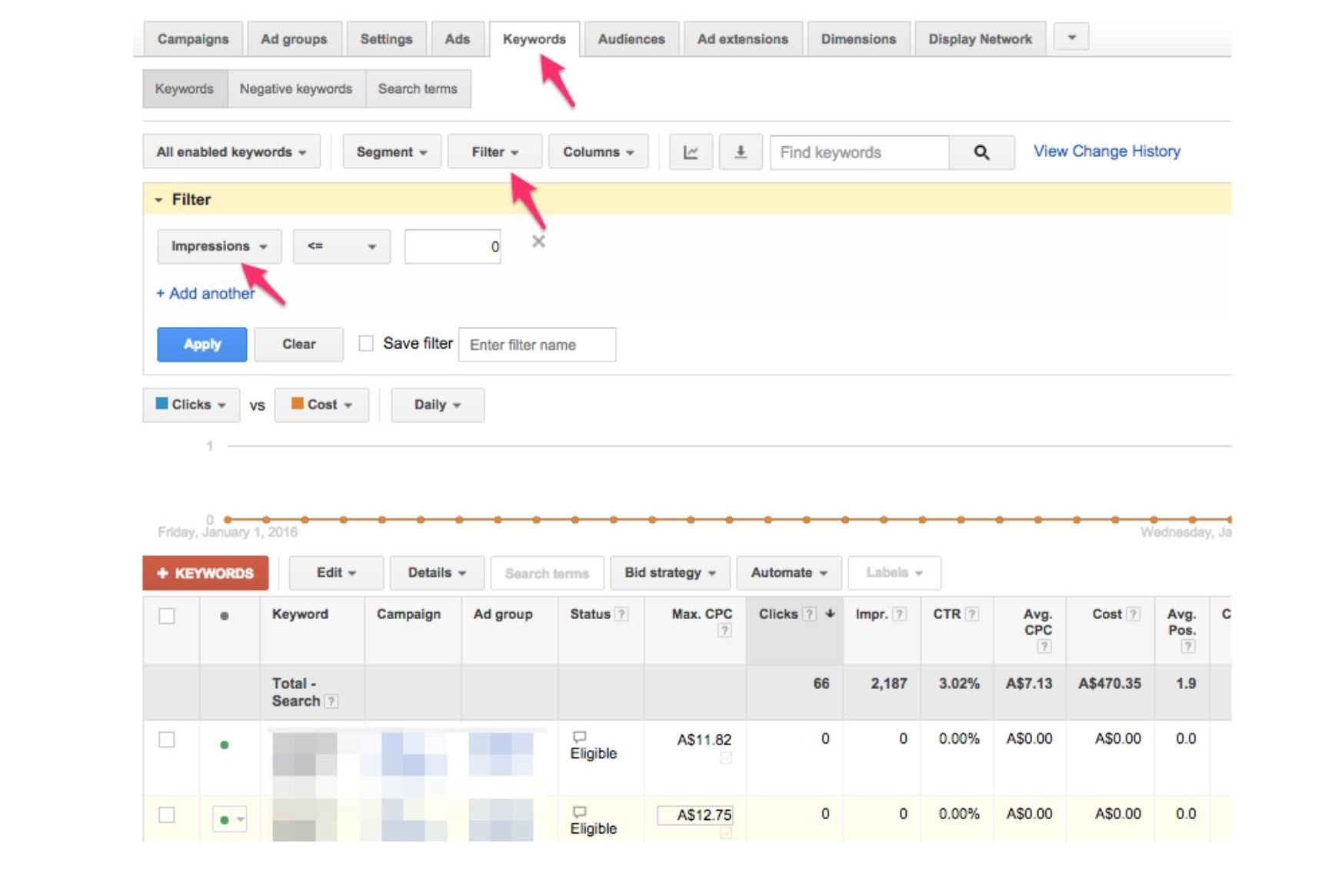
You may give a certain time expecting they will improve performance. However, you must not give inconsiderable time span.
It is better to pause them immediately. Rather than wasting time on them you should concentrate on keywords that are actually working well.
- (ii) Keywords getting Impressions but Zero Clicks
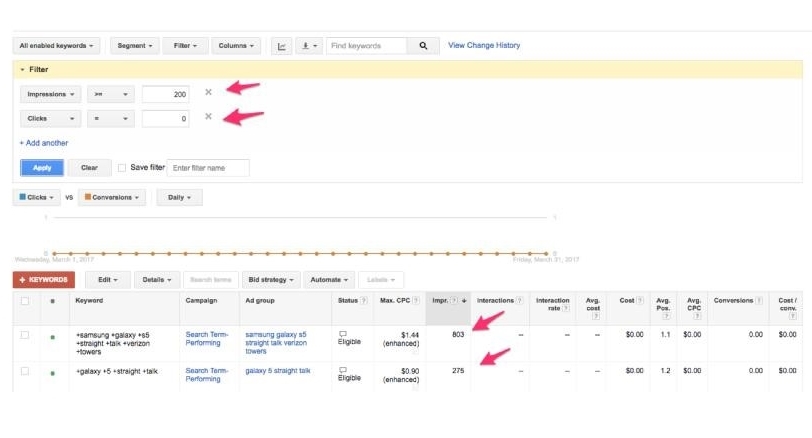
Getting impressions does not mean they will surely draw clicks. If keywords cannot generate a single click after having more than 200 impressions you need to eliminate them.
These types of keywords lower the CTR, which ultimately drags down quality score. You must not tolerate these keywords in lower quality score account.
Account with good quality score may consider more impressions- at least 1000 impressions. As keywords that are generating impressions today, they might be potential for paying you back later. Well optimized account holder must try to optimize those keywords.
- (iii) Keywords having Clicks but Zero Conversions
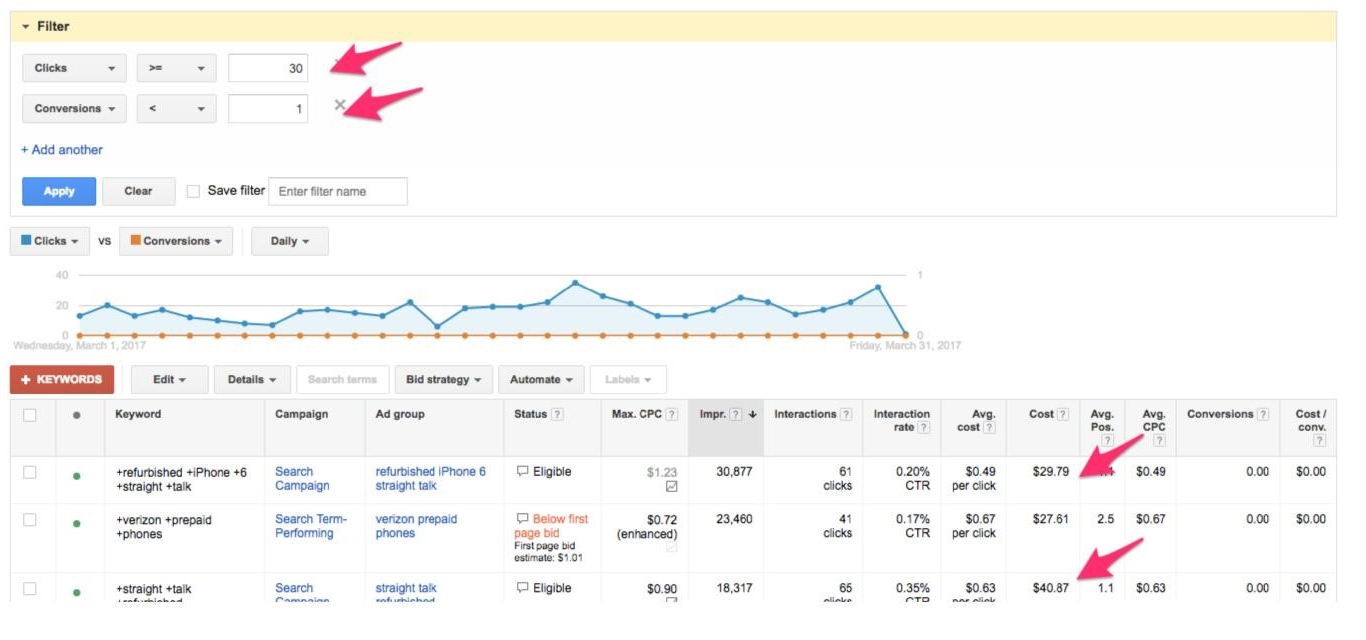
Even having well optimized account, you must not spend much time with these kind of keywords. As they are having clicks, they are counting your costs.
You are paying for clicks and therefore you do not want that money to get wasted.
To deal with such keywords we always find our Maximum Profitable CPA that is our target CPA. We pause a keyword, when it crosses double of our target CPA.
You can set your own rule for removing a keyword in Adwords. It will automatically stop keywords that are not converting.
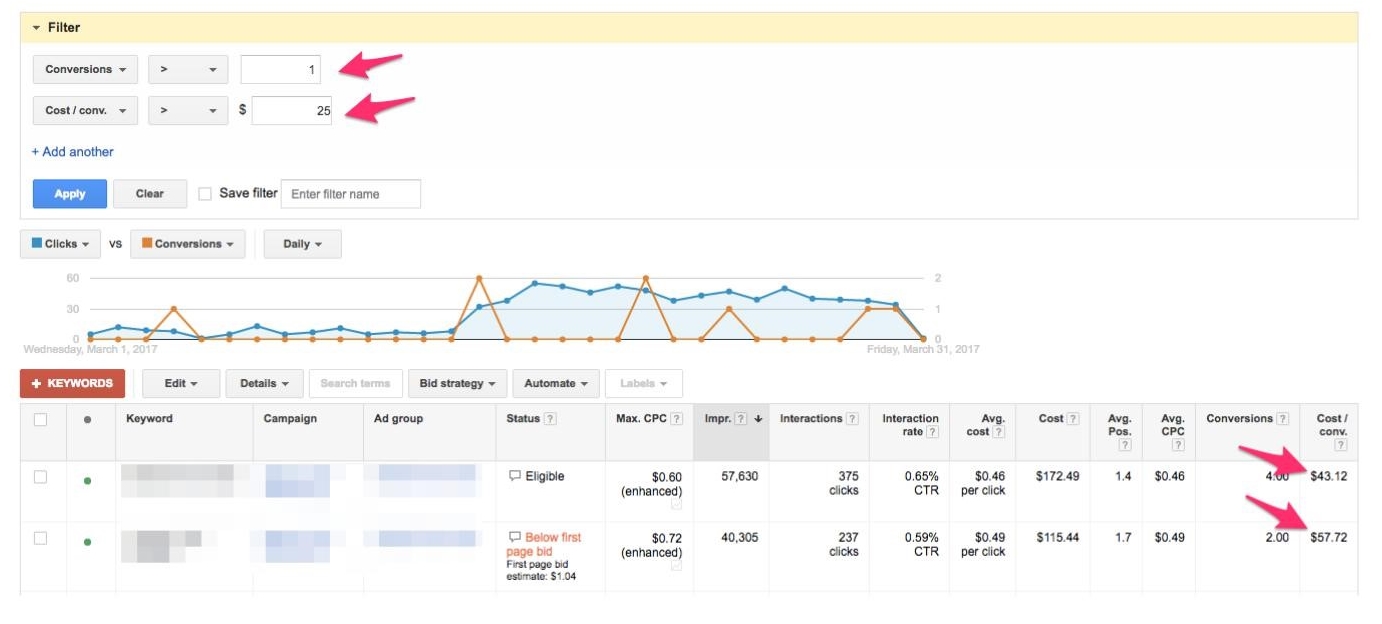
- (iv) Keywords that are acquiring more CPA for Conversions
CHAPTER NO. 9
How To Deal With Well Performing Keywords
As you are having keywords performance report in your hand, you can find which keywords are actually paying you back. These well performed keywords are actually doing business and they are your treasure. These keywords also help you out to introduce potential new keywords.
No, you should not let them run themselves. We always suggest our clients to keep trying to increase their performance and always promote them. To increase profitability you should have more keywords like them.
In order to increase campaign performance, you should also analyze the performance and characteristics of well converting keywords.
These are those keywords that have potential to return you back. You should not pause them at all. They are costing more for conversions but they have possibilities of improvement.
You need to draw strategies to optimize them. As they are still generating conversions, you must not eliminate them. However, you need to improve their performance. Initially you can bid less on them.
You can create a new landing page for these low performing keywords. Specific landing pages for these keywords sometimes give result by reducing CPA and improving Conversions. But ultimately you must concentrate on well performing keywords.
- (i) Analyze Search Query
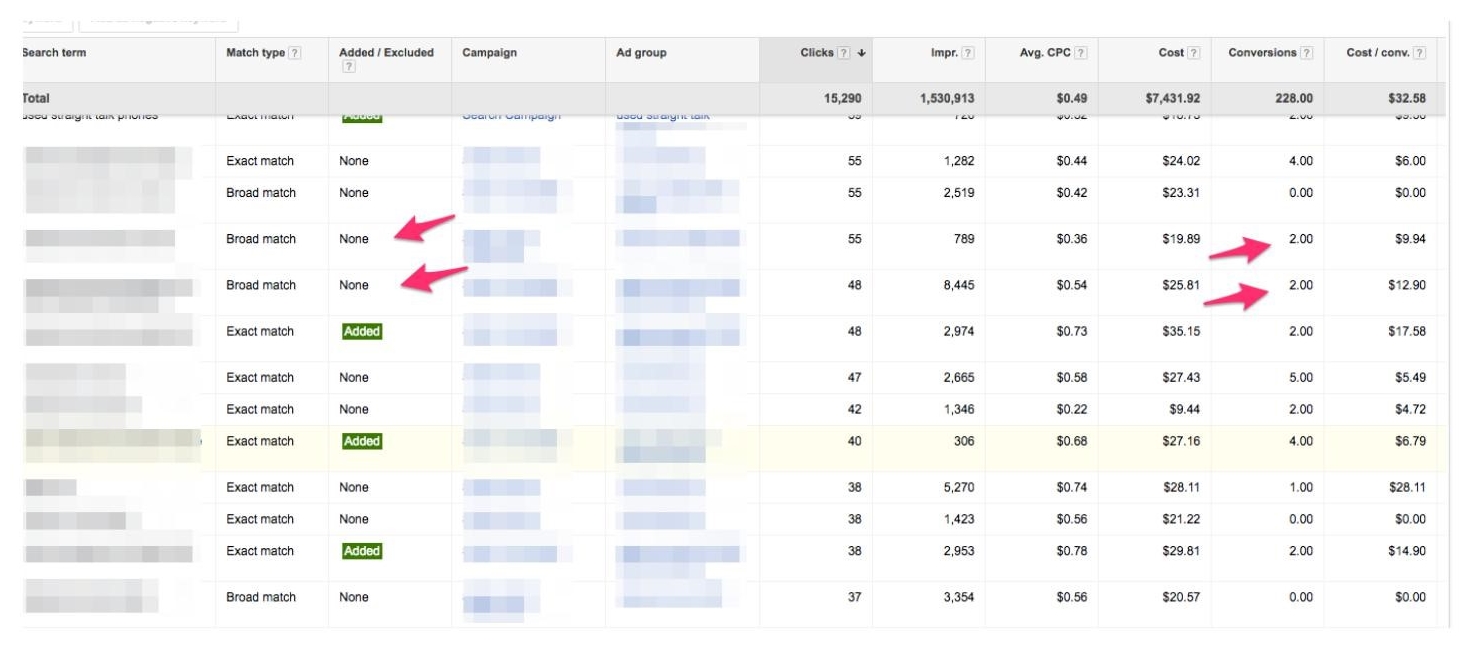
You need to analyze search query report. This report will help you to focus on finding exactly in which search queries these performing keywords are displaying your ad.
Depending on the search query analysis you may introduce new keywords. However, we prefer to use modified broad match type if any of the performing keywords are from broad match, phrase match or modified broad match. It will let the new keywords find new search queries.
- (ii) Bring Changes in Bidding Strategy
Different bidding options would help you to trace if you are bidding at maximum profitability for those performing keywords.
You may introduce different bidding strategies such as optimal bid, enhanced CPC or conversion optimizer. By increasing or decreasing bids you can identify which is ideal bid for a certain keyword.
- (iii) Check Quality Score
Keywords may bring conversions but it is quality score that tells truth about keywords performance.
If keyword is having QS which is below 6 then they are not performing at optimal level. You need to create separate ad groups with lower QS keywords. We recommend creating each ad group with only one keyword. It will ease your work to improve QS through testing.
On the other hand if QS is below 4 then you should increase bid on those ad groups while testing. You can decrease bid gradually once QS starts improving.
- (iv) Find Some Synonymous
There are huge possibilities of the fact that users may put others terms than you are using to search your product.
Most of the cases we have found applying synonymous of performing keywords reflects good result. You should find similar keywords in order to have enhanced conversions.
CHAPTER NO. 10
Keep Your Campaigns Neat & Tidy

It is not the volume of keywords that determines your ROI. It is all about their performance. Your PPC marketing gets benefitted only when each of your keywords pay you back. You need to make your campaigns neat with only those performing keywords.
We have found most of the advertiser’s account is unnecessarily complex and packed with underperforming keywords. At this juncture most of the advertisers suggest to use long tail keywords.
Our experience supports only small keywords inventories because they are simple to understand and manage. Though long tail keywords are more specific and less expensive but it can match lower volume of traffic.
Long tail keywords are less competitive but at the same time they will only sit around if you cannot make them work.
If you cannot use long tail keywords effectively, it can only expand your account. Long tail keywords may face less competition and can save your money but they cannot make you meet your advertising goal.
Here comes the necessity of match types. Match type lets you fetch impressions from those keywords that are not in your list.
It is really good advantage of using match type proficiently. You can seek help for broad match type if you want to expand your account with effective keywords.
We would like to suggest you to use long tail as less as possible if you cannot control them or have mastered in them. It would be better to concentrate only on match type.
CONCLUSION
Final Thoughts
We hope this discussion will help you to run your PPC campaign successfully and will provide you with much input while you will design your next campaign.
Strong keywords strategy is key to success. Though it is an ongoing process to research with keywords, you should introduce best practices. The more you are involved in keywords management, the more you can array powerful keywords techniques. You must not copy strategy from your competitors or never follow advice blindly.
You need to analyze competitors’ success and advice and use the keywords as per your strategy and must organize those ideas accordingly to make them work for you.
Success of PPC Campaign is determined by how many performing keywords are there and how successfully you are treating them.
You need to understand why people will click on your ad and how to transfer most of the clicks into conversions. As you concentrate on the reasons you will come up with more successive solutions.
Do not be so complicated. We suggest you to run a separate campaign only with the performing keywords. It will make you understand what we have actually conveyed through these two discussions.
One more important thing- analyze keywords performance before you cut them out from your account. Do not make any changes without going through satisfactory justifications.
Free Download
Get the PPC Account Health Checklist — 15 things a real audit checks before anyone touches your budget
Resources
Company
Contacts
- 191/3, Mehrauli,
- New Delhi 110030
- Phone: +91-8860287799
- [email protected]


Copyright © semflux 2026. All right reserved