The Best Ways To Utilize Long Tail Keywords in Google Adwords
Keywords play a crucial role in the accomplishment of your PPC campaigns.
They are the focal point of every PPC decision that is made.
When performing keyword research, being very specific about the relevancy and search volume of the keywords that you choose.
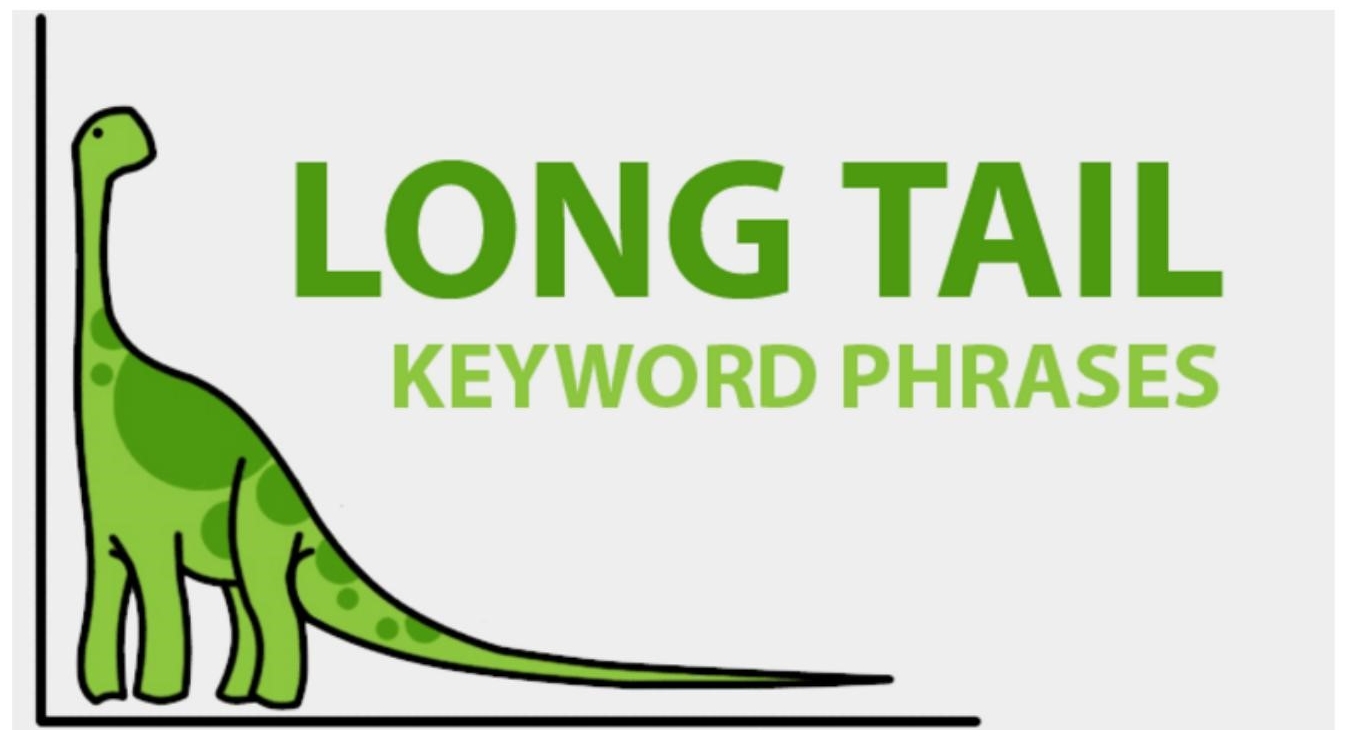
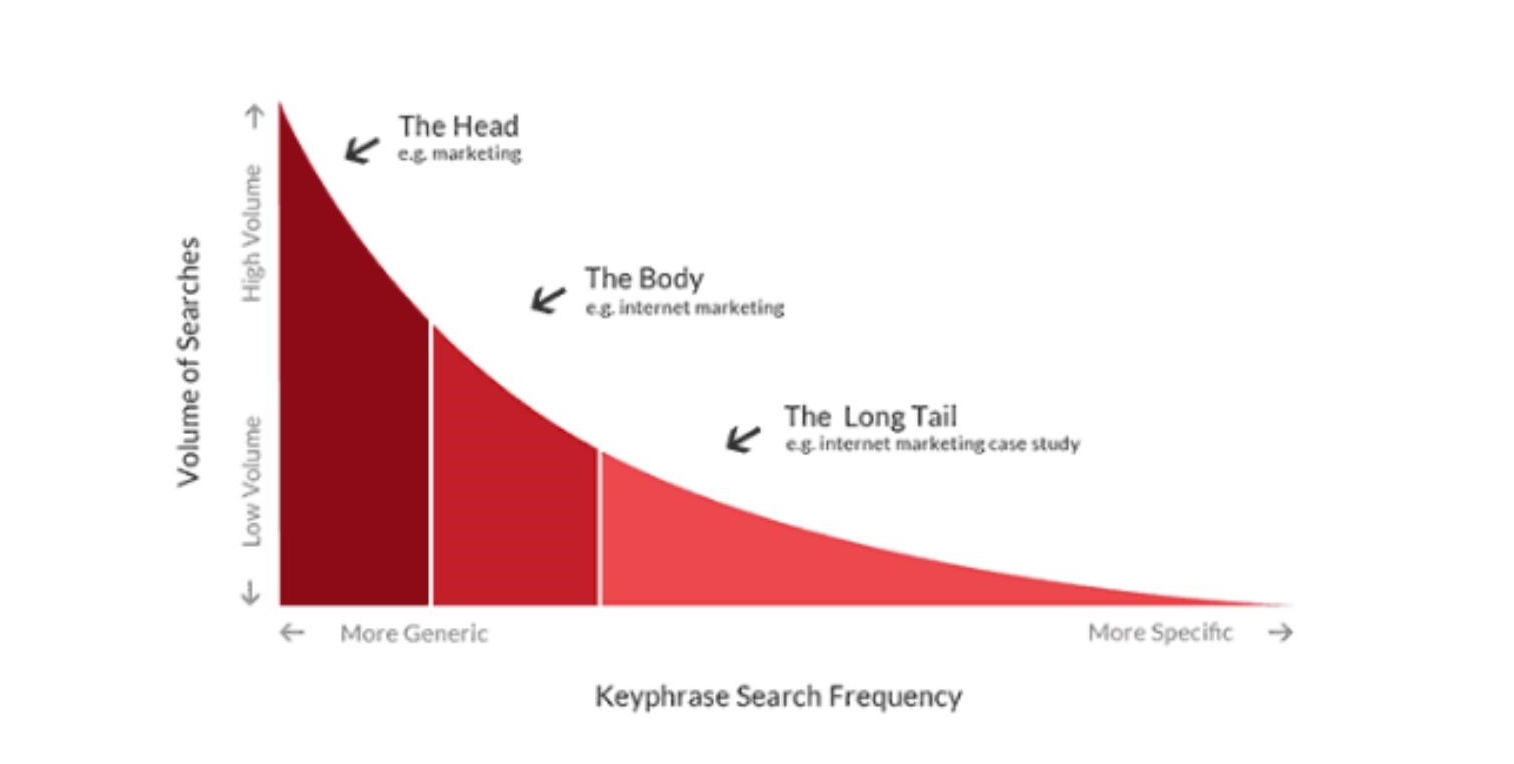
Long tail keywords are very targeted search phrases with low individual search volume and clearly identifiable search intent.
There are 2 elements that make a keyword long tail:
- - Keywords with 3 or more phrases.
- - Specificity
Both the above elements are complementary to each other.
The more specific you get with a search phrase, the less volume there is likely to be.
It usually contains a head term followed by 1 or 2 generic terms.
For example:
Head Term: Penguin
Long Tail Keywords: buy Penguin games online, Penguin costumes for kids, Penguin HD videos online.
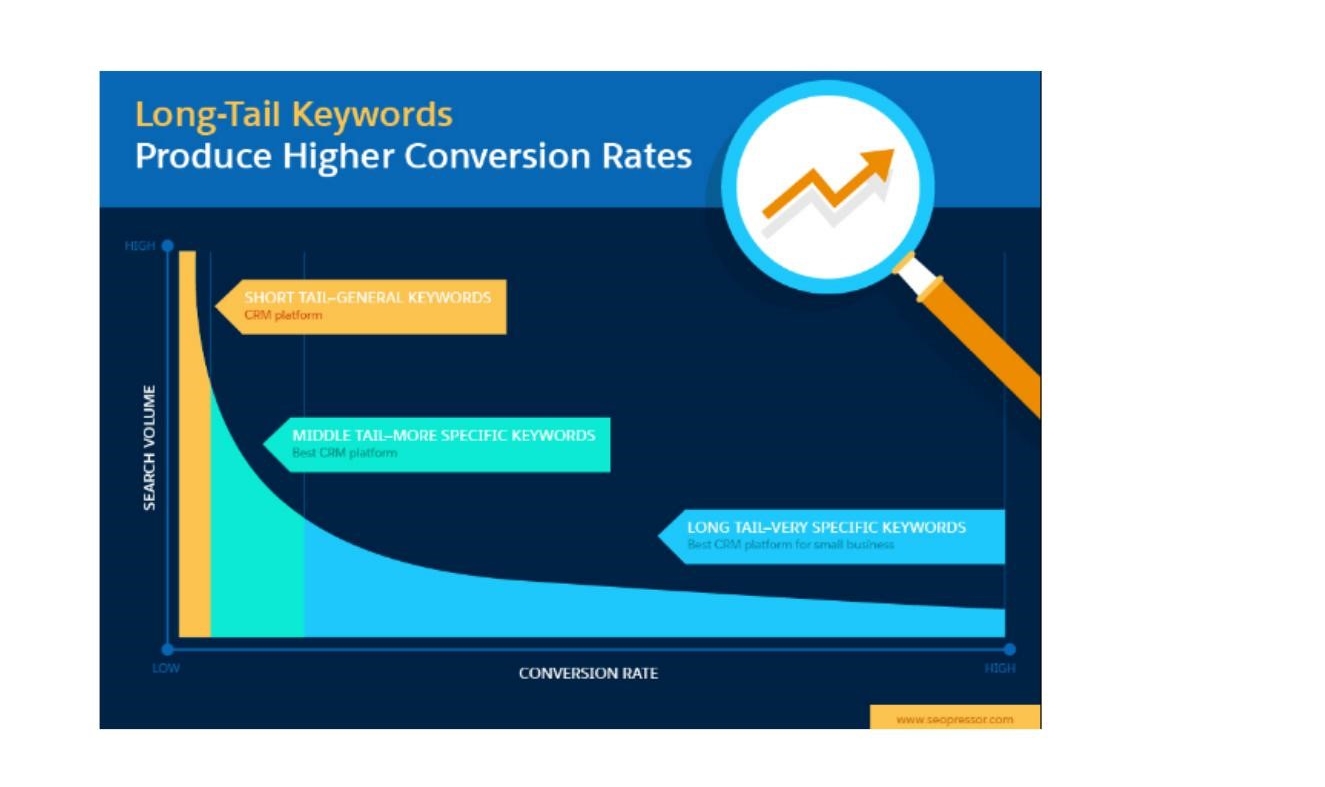
Long tail keywords are more specific and longer than the most commonly used keywords. They acquire less search traffic but they are more specific, so they usually have a higher conversion rate.
If you really want to earn profit from keyword strategy that focusses on long tail keywords, you need to have a clear perception about your company, your product and your website.
If you are running PPC advertising, you can benefit great deal by using long tail keywords. As PPC is remarkably competitive with quite high CPC, which creates an obstacle to reach the desired results.
Therefore, by using Long Tail Keywords, you can create laser-focused ads that will target quality traffic for you.
No matter what your PPC strategy is, targeting long tail keywords is a must if you want to optimize your campaign and generate higher ROI.
Long tail keywords are a bit contrary at first but can prove to be very valuable if you know how to use them
In this guide we are going to discuss 3 main aspects of long tail keywords:
- A) Reasons why you should utilize long tail keywords in your PPC Campaigns.
- B) Tips on how to research long tail keywords
- C) Points on how to analyze and improve your long tail keyword search strategy.
CHAPTER NO. 1
Here are some reasons why you should utilize long tail keywords in your PPC campaigns
1. More Targeted Traffic
Long tail keywords are more specific and targeted, which means visitors who land on your website from long tail search terms are more qualified.
We can take the above example, the long tail keyword “Penguin Costumes for kids” will receive more relevant target than “Penguin Costumes”.
Long tail keywords offers high quality search queries, which is a necessity for successful PPC campaigns.
Users who use long term search phrases knows exactly what are they looking for and that helps them to receive the most relevant traffic.
2. Less Competition

With shorter keywords, competition for rankings can be violent, with scattered visits and low ROI.
With smart execution of long tail keywords, you may draw less traffic but the return on your investment will be proportionately much higher.
You will be attracting the exact audience that you are looking for. The more precise your search query, the less competitive it is.
Since, long tail keywords involves a lot of research, most advertisers are reluctant in per-forming the excessive keyword research for them.
This results in less competitive keywords and your site will then appear on the first page of Search Engine Result Page.
3. Higher Conversion Rate

People that search using long tail keywords are typically looking for something very specific. They have narrowed their search in order to get exactly what they are looking for.
The benefit of using long tail keywords becomes specially important if you are running a PPC campaign where every click has a cost.
So it becomes obvious that, what matters to you is quality over quantity of the visitors. If you are selling “Advanced Accounting Softwares”, you won’t be interested in visitors who are just looking for “Basic Accounting Softwar” because these visitors are much less likely to convert.
ince, the visitors you are getting for long tail keywords are exceptionally well-targeted, this will generally lead to more conversions for you.
The conversion rate increases as the number of words in the search term increases.
This means that you website has become relevant to the queries and now you will experi-ence reduced bounce rate and increased conversions.
4. Highly Affordable for PPC
By investing in PPC management, you can generate traffic on a more immediate basis.
But PPC management can be highly expensive if you choose to go after very competitive keywords.
To prevent yourself from using such expensive keywords, start targeting long tail keywords.
Since, there is less competition for long tail keywords, so they are much less expensive than the regular keywords.
5. Increased Search Volume (Impressions)
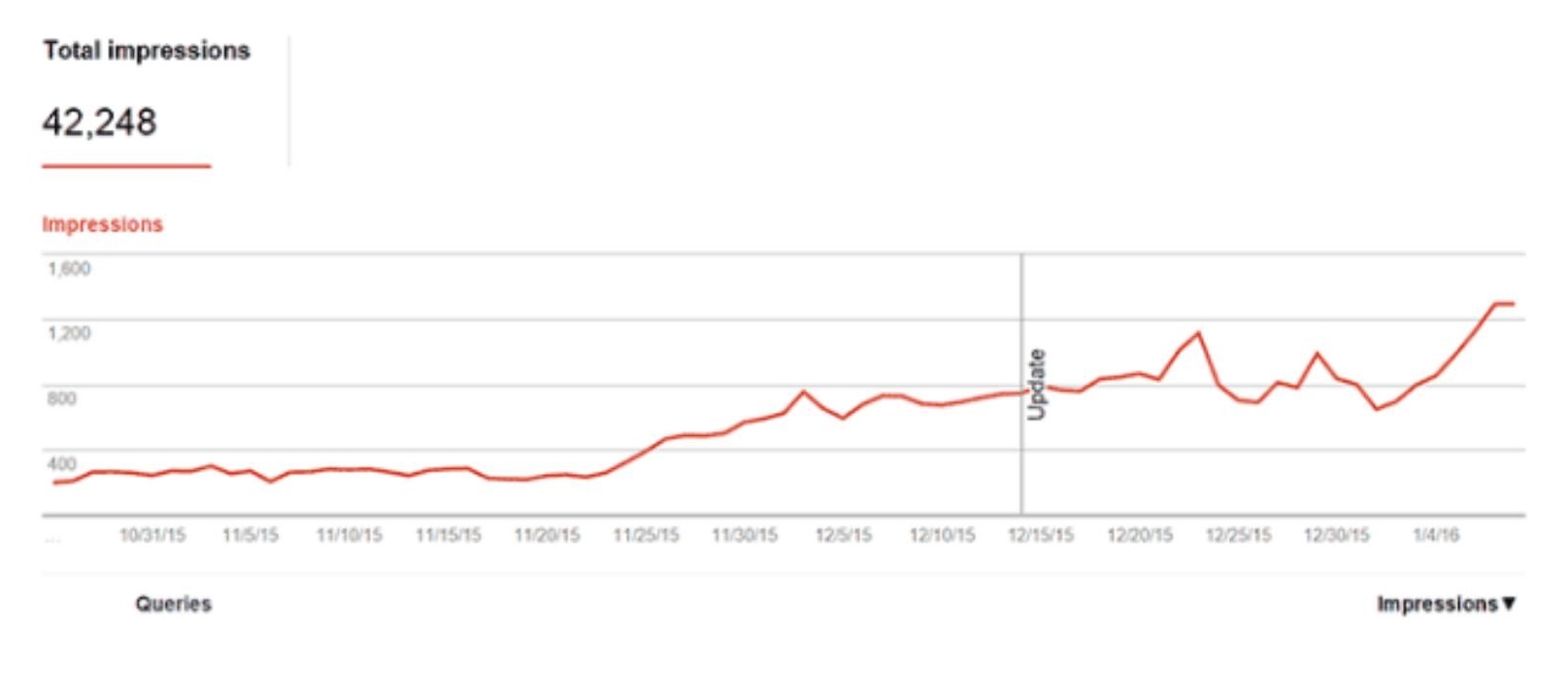
Long tail keywords have a substantial search volume. The power of long tail keywords lies in being together, as a group.
A PPC campaign with thousands of long tail keywords can be a serious source of additional traffic to your website. Furthermore, it has been noticed that searches of 5 or more words account for almost 70% of all the impressions.
- (i) Bids
Applying perfect match type will help you manipulate bid. You can make it more aggressive or restrict-ed. Bid can affect average position, Conversions and CPA.
- (ii) Competitors
You should observe what your competitors are doing with match type. Your good observation may help you to select workable match type for your campaign.
- (iii) Performance by a period
You should run your campaign with each match type for a certain period. It will tell you which one is performing better for your objectives.
- (iv) Account structure
You should structure your account on various segments classified on using different match types. Creat-ing separate ad texts for separate match types for a single product can help you to know about the most optimal match type for your campaign.
6. Higher Click through Rate
The Click through Rate for long tail keywords is high, because:
- - Long tail keywords have less competition, so the chances of your ad being clicked becomes high.
- - Long tail keywords are more specific in requirements, so you can write more targeted and relevant ad to make sure that the user clicks on your ad.
If someone searches for “cheap LG 42 inch LED television” and your ad mentions the words “LG”, “42 inch”, “LED”, and “television”, it makes sense that your ad will be more appealing than a general “LG television” ad.
You should also know that searches of 1,2 or 3 words have relatively low CTR.
As the words in the search increases, the CTR also increases simultaneously.
CTR is considerably strong for long tail keywords rather than the short one.
7. Low Cost per Click and Higher Average Position
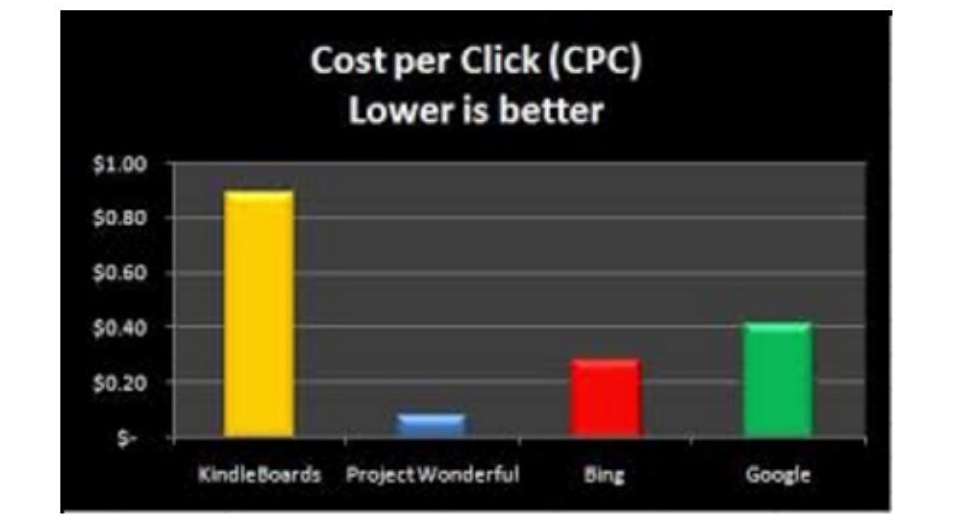
By now you must have known that long tail keywords have less competition. There are very few people who bid on these keywords to drive up their prices. So they are relatively cheaper.
Hence the Cost per Click for long tail keywords is quite low. To determine whether the long tail keywords are cheaper than the generic keywords or not, it becomes important to bring average position into thought.
CPCs and ad position are closely related, as higher CPC means higher ad ranking. When you set a maxi-mum CPC bid for each keyword, your ad will be shown as high as possible but within your maximum bid.
8. Lower Cost per Acquisition
CPA is a metric that measures how much you will have to pay so that you get a conversion.
Generally the CPA is higher than the CPC because not every visitor of your site will convert into a lead or sale.
There is a clear relation between word count and CPA. Conversions from long tail searches are cheaper than conversion from generic or short tail searches.
Since, the long tail keywords have a lower Cost per Acquisition, so by incorporating them in your PPC keyword strategy, you can earn huge profits.
9. Helps You to Stay Active

In the Search Engine Result Page, if you slip for a head term, your business will face a dramatic blow, with a harsh path of recovery.
If you modify your PPC keyword strategy by integrating long tail search terms, losing rank on the SERP won’t unsettle your business.
Here, the long tail keywords will prevent you from getting a panic attack and will let you regain the SERP positions quickly.
10. Creates Audience Connection
In the Search Engine Result Page, if you slip for a head term, your business will face a dramatic blow, with a harsh path of recovery.
If you modify your PPC keyword strategy by integrating long tail search terms, losing rank on the SERP won’t unsettle your business.
Here, the long tail keywords will prevent you from getting a panic attack and will let you regain the SERP positions quickly.
CHAPTER NO. 2
Tips on how to research long tail keywords
As mentioned above long tail keywords offer high quality search queries with high conversion rates and low CPA. Therefore, having a proper keyword research strategy for long tail keywords becomes essential-ly important.
So, how do you construct a long tail keyword list?
Well, there are some elements of long tail keyword development, that will help you to identify proper keywords which will improve the overall performance of your campaign.
1. Operate Search Reports
To build a strong and proper long tail keyword list you will have to look forward to 2 kinds of reports, that are:
(a) Search Term Performance Report:
This is the simplest and most effective way to generate long term keywords. It identifies all phrases searched that leads to clicks and conversions for your campaign. It is a great place to start looking for long tail keywords. This report will give you a ready made list of potential keywords which the people might have searched using the terms that were not on your keyword list. Here, the keywords come directly from users, making your work easier of finding quality long tail keywords.
Search Query Report:
It is a great resource. This report will show you the exact queries that your ads showed up for. This is one of the most relevant ways to build out your long tail keyword list because the results come directly from the users and are related to your campaign. You should run this report monthly so that you can add new terms to your list.
2. Localize Your Keywords

After building a well-structured list of long tail searches and queries, localize your keywords to further refine your searches on the basis of geographical location.
Use your existing keyword list and add localised terms. The localized terms can range from country, state, city, town, village, zip code- anything that narrows the scope of to a specific location.
For example, if your business operates in a specific location, then localizing can help you in targeting your desired audience.
3. Include Qualifying Terms
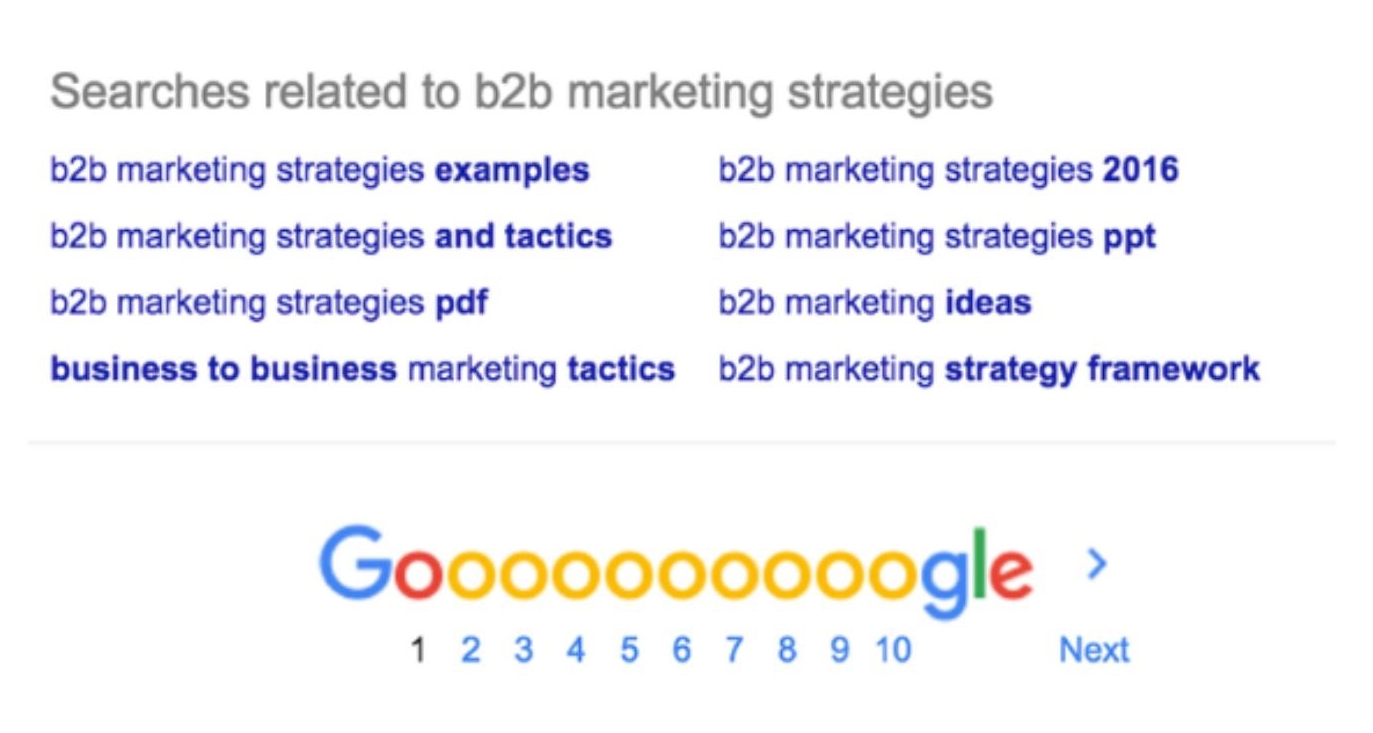
Qualifying keywords support the head keyword and give extra information of a particular product/ser-vice. For example:
Head Keyword: b2b marketing strategies
Qualifying Keywords: examples, and tactics, pdf, ideas, ppt etc.
The qualifying keywords make the query very specific.
Since the competition is very intense, so merely using short keywords is not a good idea.
Use add-ons, complementary products, color, size, style, model, etc to add with your keywords in so that the search query can be converted from generic to specific.
Continue to add as many themes as possible and then run a progression of all your root search terms along with all qualifying keywords.4. Examine Your Internal Site Search
Do not forget that the internal sources are as important as external sources. Remember, your website still offers a reasonable place to find long tail keywords. Moreover, your website gives you a more detailed description of your product/service that can be used as quality search phrases for your customers.
If your website has a search box, have a look at your data to get a clear idea of what people are search-ing in your website.You may be amazed to see some of the terms that people actually use. Additionally you may find search queries that location-oriented, product specific or may be in the form of a question or statement.
The most impressive element of reviewing your website search is that you get the data which rep-resents the exact queries that your site visitors searched for. This is your own data, so make sure you pay close attention to it and respond accurately.
CHAPTER NO. 3
How to analyze and improve your long tail keywords search strategy.
1. Measure the Traffic from Current Long Tail Keywords
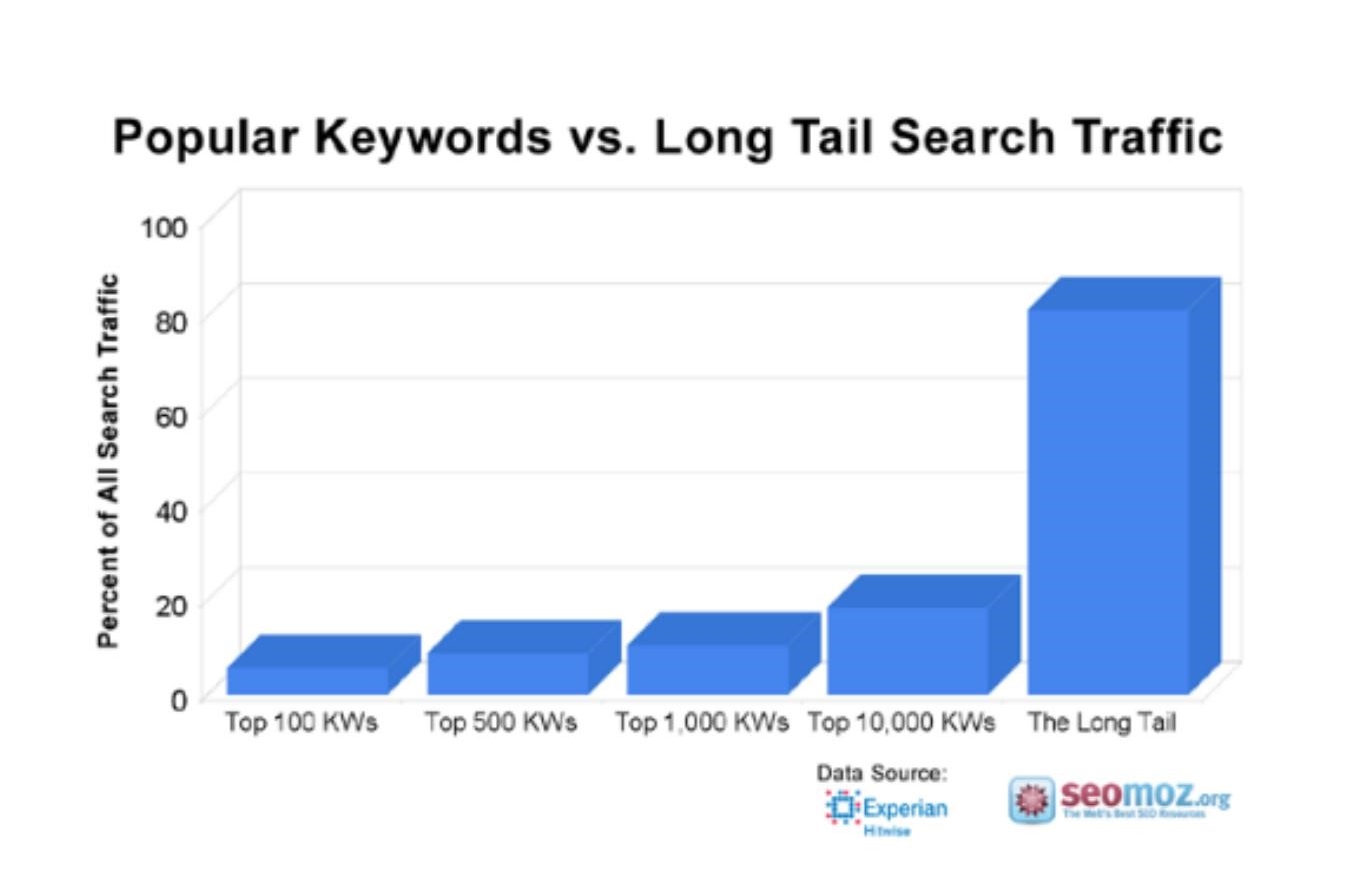
The very first thing you have to analyze here is the amount of traffic that is being generated by your current Long Tail keywords. By determining this from the very beginning you will get to know whether your current long tail keywords are working optimally or not.
Since, there is always room for improvement, so if your current long tail keywords are not generating your desired amount of traffic, you can always search for more of them.
2. Scrutinize the Value of Long Tail Keywords
What is the point of landing up in the top of the Search Engine Result Page for a long tail keyword and driving no traffic?
Is it a good place to spend both your time and money?
NO!!
Another point to note is here is that generating traffic is not enough. Generating quality traffic that converts into leads and sales should be your motto.
If you are able to generate traffic but still the conversions are low, start testing your landing pages, Calls-to-Actions and other parameters.
After inspecting all other parameters if still you’re witnessing low conversions, focus your efforts on more profitable and productive keywords.
3. Use Long Tail Keywords Correctly
Your Long Tail Keywords strategy will only be productive if it is supported by mind-blowing headlines, attractive images and comprehensive content that serves user intent. Avoid the enforcement of long tail keywords in your content in any way. Do not put keywords that look unnatural or irrelevant to your users.
Remember, Google is more interested in the relevancy of headlines, images and content.
The pages that are artificial or using irrelevant keywords are often being penalized by Google.
4. Understand Your Buyer Persona
There is no doubt that in digital empire, user experience is the first priority. To stay in competition, you need to provide information that serves your user’s intent precisely. You need to understand your target audience and create buyer personas to make easy and \effective long tail keywords strategies.
Buyer personas help you to understand your visitors and improve your search traffic by making the variations of long tail keywords more specific. The intention of creating a buyer persona is to pull out as much as information about your target audience.
Particular information about your audience, their demographics, their tastes and preferences will help you to include keywords that target the right audience and avoid those keywords that drive in irrelevant audience.
5. Find the Right Long Tail Keywords
This is probably the most difficult task while optimizing long tail keywords strategy. Most of the market-ers fail to pick the right keywords and this makes their traffic rate stagnant or negative.
No wonder, long tail keywords are low in search volumes but if planned correctly and according to the user, the long tail keywords can narrow down your competition and help you to rank higher.
However, to find a profitable long version of your keywords, go to Google Adwords Keyword Planner, input your head keyword and get an idea for your long tail keywords form the results.
6. Make Your Headline Keyword Rich
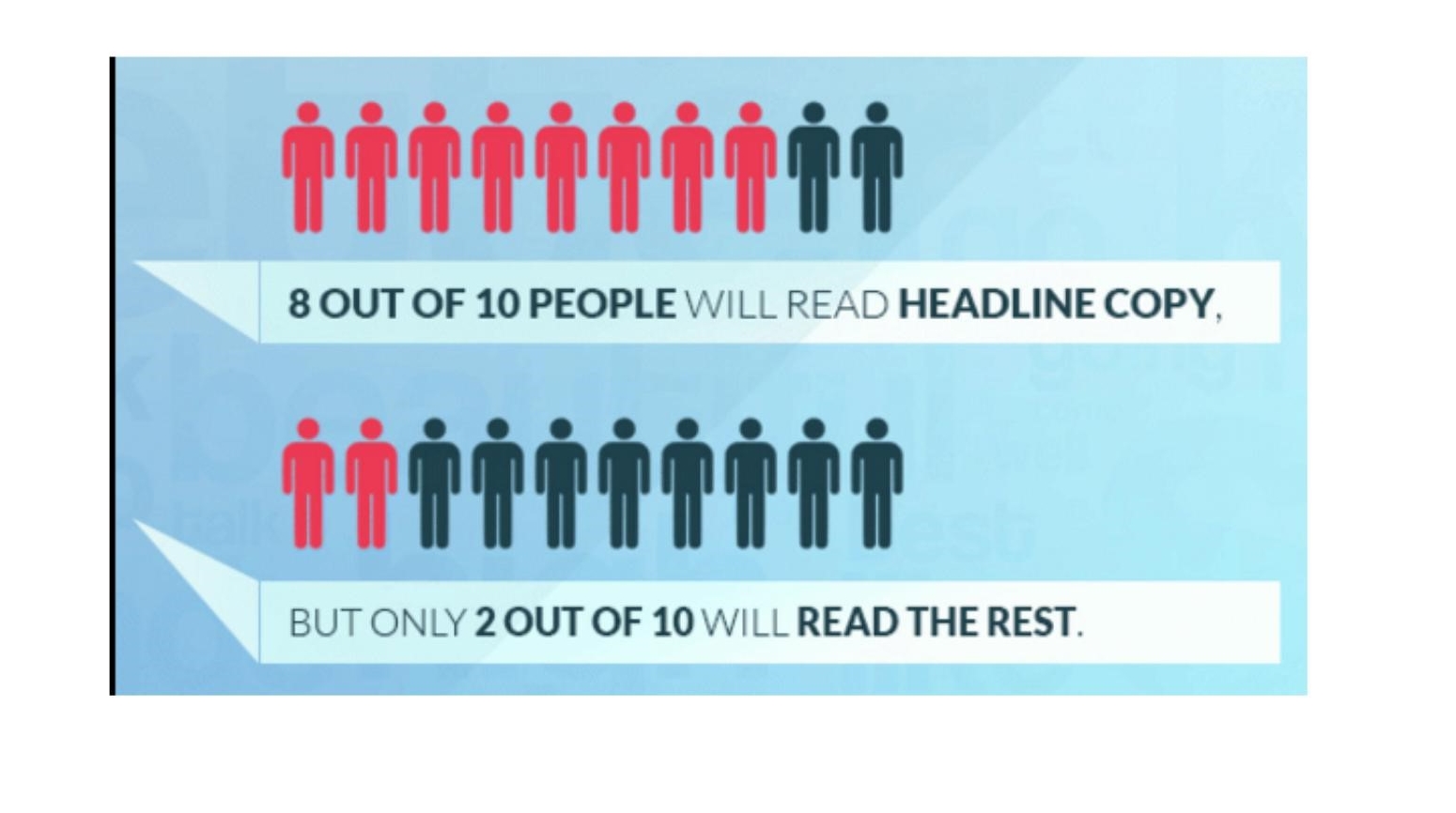
To make good use of your long tail keywords strategy, focus on creating attractive and captivating head-lines along with you head keyword placed suitably in it. The headline acts as a filter. It grabs your target market and convinces them to look through the rest of your ad.
Remember to keep your primary keyword in the headline. Since, there are no proper rules of incorporat-ing long tail keywords in your headlines, however, if your keyword flows naturally in your headline, your website gets a chance of ranking higher with an increase in quality traffic.
7. Track and make improvements
To get your long tail keywords strategy all right and in place, you have to continuously keep a track of the performance of your long tail keywords. Start tracking which long tail keywords drive the most potential customers.
With the help of tracking you will get to know whether your keywords are effective in increasing the visibility of your page or not. To constantly figure out the pain points of your customers is also very important.
This will help you to create content with keywords that target the needs and wants of your target audi-ence.So in order to maximise your revenue with the help of long tail keywords, you need to constantly monitor the performance of your keywords and make prompt improvisations.
CONCLUSION
Final Thoughts
If you want to make every dollar count, make sure that the long tail keywords hold a sub-stantial proportion of your PPC keywords strategy. Long tail keywords may be hard to identify.
But if you manage to discover those that work for you, you could possibly have a really positive impact on your PPC campaigns.
You will also benefit by getting a continuous stream of targeted traffic.
Long tail keyword expansion may be a great way to broaden your PPC campaigns at low cost.
Free Download
Get the PPC Account Health Checklist — 15 things a real audit checks before anyone touches your budget
Resources
Company
Contacts
- 191/3, Mehrauli,
- New Delhi 110030
- Phone: +91-8860287799
- [email protected]


Copyright © semflux 2026. All right reserved